


In the powder processing of Chinese herbal materials, requirements for the grinding fineness of root and seed materials have been gradually increasing. Common varieties such as Sanqi, Dihuang, Huangqin, Fuling, Danshen, Baizhi, Niubang and Jue Ming Zi differ considerably in texture, sugar and oil content, and heat-sensitive components, and therefore show different processing behaviour on the same equipment. According to the material selection data compiled by the company, the moisture content required before feeding is generally ≤8% to ≤9% for these materials (with ≤7% recommended in some cases), and for prepared Dihuang it needs to be reduced further to ≤5%. Moisture content and grinding-chamber temperature are two variables that need to be confirmed at the outset of equipment selection.
The control priorities vary with material properties. Dihuang and prepared Dihuang contain polysaccharides and mucilage, with high sugar content and a low softening point; the data indicate that when the chamber temperature exceeds 40°C the material tends to stick to the classifying wheel and filter bags, and output may drop by 20%–30%. Sanqi and Fuling are hard and dense and generate noticeable heat during grinding; for Sanqi, a temperature rise above 50°C may degrade saponin components and intensify the bitter taste, and fineness above 500 mesh requires a jet mill or classifier, as a single pass through a mechanical mill is difficult to reach it. Huangqin and Fuling contain starch, and a temperature rise above 45°C carries a risk of starch gelatinisation and sticking inside the chamber; Huangqin also needs to avoid contact with iron ions that can cause colour changes. Baizhi contains volatile oil, and its aroma is sensitive to temperature. Oil-bearing seeds such as Jue Ming Zi tend to release oil and form lumps after grinding, sticking to the screen. Danshen and Niubang contain more fibre, so attention is needed for fibre wrapping around the classifying wheel and bridging at the feeding point. The above are notes on material processing characteristics; actual fineness and output need to be determined according to test results for the specific material.
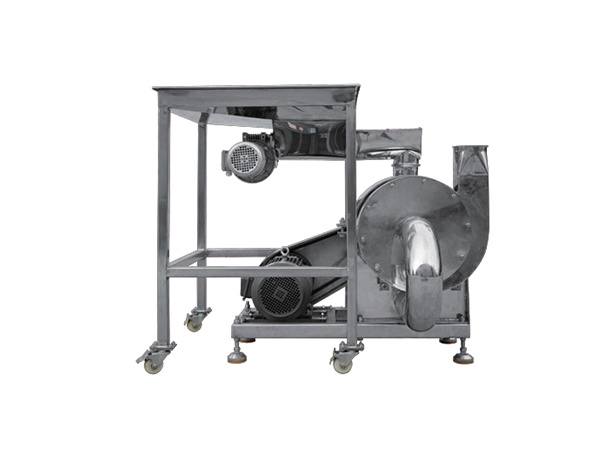
To address these differences, the equipment configuration can be adjusted to the material properties. For pre-treatment, materials are cut into sections or slices and coarsely crushed to 3–5 mm, with stone removal and iron removal, and a hammer crusher can be added upstream for hard materials. For cooling, a water-cooling jacket is fitted; for high-sugar and heat-sensitive materials, air cooling can be added to form dual cooling, together with chamber-temperature monitoring and an over-temperature alarm interlock. For contact materials, a 304 mirror-polished, detachable and washable structure is used, with wear-resistant tooth plates and rotors for hard materials, and passivation treatment plus stronger magnetic separation for materials sensitive to iron ions. For collection and filter bags, a pulse-jet bag filter with PTFE-coated anti-static filter bags is used, and sealed discharge is adopted for materials that absorb moisture easily. For feeding, variable-frequency uniform feeding is used, and the feed rate is controlled for hard materials to reduce blockage and current fluctuation.
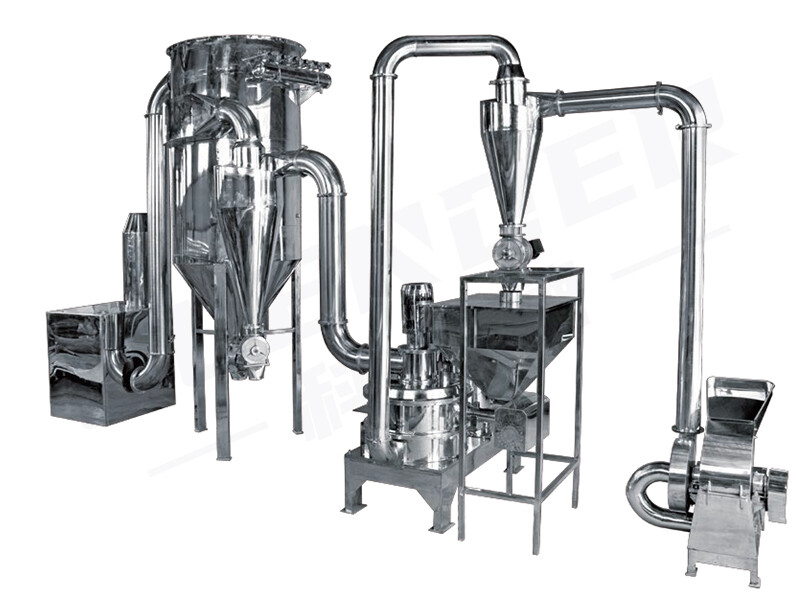
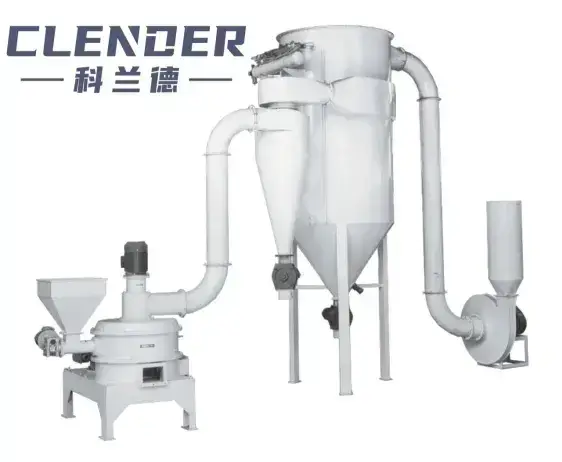
Qingdao Clender Machinery Technology Co., Ltd. focuses on ultrafine grinders and auxiliary equipment, with products covering grinding main units, classifying systems, cyclone collection and dust removal systems as complete sets, serving industries including pharmaceuticals, food, chemicals, feed and agricultural by-products. The company can provide model selection and configuration suggestions according to material properties, with the specific plan subject to test results. For information on grinding selection for a specific material, please contact the national hotline 17667801431, or email the sales mailbox karan@clendercn.com or the service mailbox service@clendercn.com.
Related Testimonials
 Key Points on Moisture and Temperature Control in Ultrafine Grinding of Chinese Herbal Roots and Seeds
 Application of the KLD40 Stainless Steel Ultrafine Pulverizer in Food Processing
 Cassava Ultrafine Grinding Solutions – From Dried Cassava to Fine Powder
 Seaweed Ultrafine Grinding: From Dried Seaweed to Fine Powder
Online Consultation