


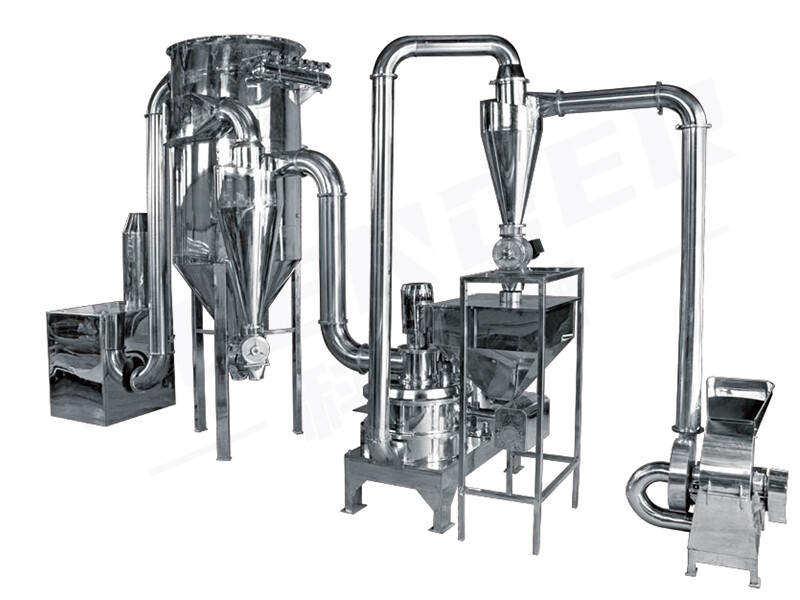
In the processing of seaweed powder and animal-protein feed materials, ultra-fine grinding involves one of the more challenging material categories: seaweed materials such as wakame powder, kelp powder and sea-lettuce powder contain alginate and salt, and become sticky once they absorb moisture; animal-protein materials such as fish meal and chicken meal have a high fat content, and fat can separate out when the temperature rises during grinding, sticking to the rotor, classifier wheel and filter bags. If such materials are not properly controlled, common problems include sticky wheels and clogged bags, reduced output, agglomerated material blocking discharge, and cross-contamination of odors. Based on the data Kolander has compiled from material testing and equipment selection, this article summarizes the key control points for grinding these sticky and high-fat materials.
In terms of material characteristics, moisture and temperature are two key variables. For seaweed materials: wakame powder requires a moisture content of no more than 8% (preferably no more than 6%); alginate sticks to the classifier wheel and filter bags when exposed to heat or water, so a water-cooling plus air-cooling configuration is recommended, with the grinding-chamber temperature kept at or below 40 degC. Dried kelp powder has a high alginate content and becomes sticky when heated; it also contains sand and salt, so sand and iron removal must be carried out beforehand, and the corrosive effect of salt on equipment should be taken into account. Sea lettuce is likewise high in salt and gum, highly sticky, and prone to agglomeration after moisture absorption. For animal-protein materials: Peruvian fish meal has a fat content of about 8%-12% and a moisture content of no more than 8% (preferably no more than 6%); fat separation during grinding tends to stick to the rotor and filter bags, and its strong fishy odor means it should not share a line with other materials. For fish meal with an oil content of about 18%, output drops by roughly 20%, finer particle sizes clog more easily, and cryogenic grinding with liquid nitrogen is an option for high-fat materials. Chicken meal requires a moisture content of no more than 4.5%; water cooling can be used when fat is no more than 12%, while water plus air cooling is recommended, with liquid nitrogen as an option, when fat exceeds 16%. Fat separation above 45 degC, which sticks to the rotor, classifier wheel and filter bags, is a key issue to guard against. The above data are based on compiled records for specific materials; actual fineness and output need to be determined according to the test results of the specific material.
For equipment configuration, these materials share several common points. First, moisture control upstream: the raw material should be dried to the target moisture content before feeding, and the finished product should be sealed immediately after discharge to prevent moisture absorption and agglomeration. Second, temperature control: a water-cooling jacket is the basic configuration; for high-fat and highly sticky materials, air cooling is added, with chamber-temperature limits and over-temperature alarm interlocks set according to material characteristics. Third, filter bags and cleaning: oil-resistant PTFE-coated anti-static filter bags are used, together with a quick-disassembly structure to shorten cleaning time when changing materials. Fourth, dedicated production lines: animal-protein materials have strong odors that easily transfer, and Salmonella control requirements, so they should not share lines with plant-based materials. Fifth, sand and iron removal: seaweed materials contain sand and meat-meal materials contain bone residue, both of which are abrasive, so sand and iron removal upstream and a scheduled replacement cycle for wear parts are necessary.
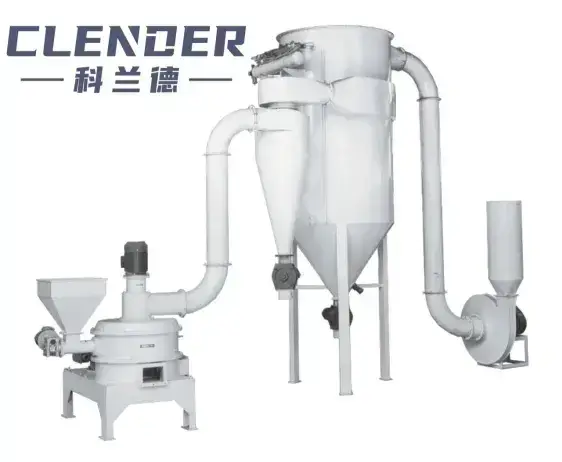
Qingdao Kelander Machinery Technology Co., Ltd. is a technology-oriented enterprise integrating equipment research and development, design, manufacturing and sales. Its main products are ultra-fine grinding machines and supporting equipment, including grinding hosts, classification systems, cyclone collection and dust-removal systems as complete solutions, applied in industries such as food, pharmaceuticals, feed and chemicals. For sticky and high-fat materials such as seaweed powder and fish meal, configurations such as water cooling, air cooling, oil-resistant filter bags and dedicated production lines can be provided according to material characteristics; actual fineness and output need to be determined according to the test results of the specific material. For equipment selection inquiries, please visit our website or contact our service hotline: 17667801431.
Related Testimonials
 Grinding of Seaweed Powder and Fish Meal: Moisture, Temperature and Production Line Control Points
 Key Points on Moisture and Temperature Control in Ultrafine Grinding of Chinese Herbal Roots and Seeds
 Application of the KLD40 Stainless Steel Ultrafine Pulverizer in Food Processing
 Cassava Ultrafine Grinding Solutions – From Dried Cassava to Fine Powder
Online Consultation